NASA News · July 28, 2026
APOD: 2026 July 28 – Barnards Loop over Twin Volcanoes
Where it is in your sky
- Object
- M 42 · Great Orion Nebula · Cluster with nebula
- Constellation
- Orion
- Best seen
- Evenings from October to February; highest at midnight in December
- Climbs above 20°
- From 75° S to 65° N
- Never rises
- North of 85° N
- What you need
- Naked eye, from a dark site
Tonight from your location
From the source
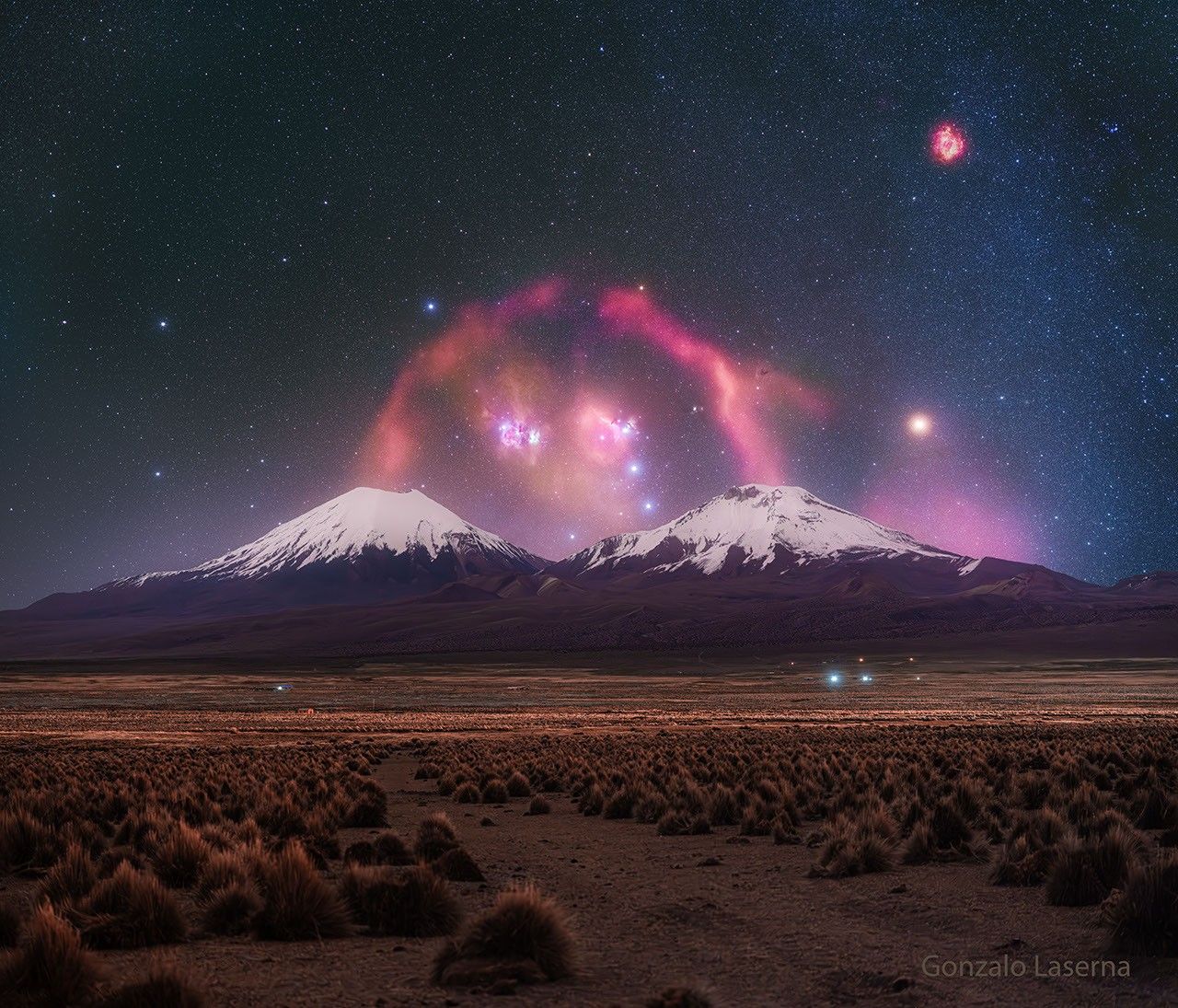
What’s connecting these two volcanoes? In ancient folklore, the two volcanoes, Parinacota (left) and Pomerape (right), are connected by representing a mythical prince and princess who engaged in a forbidden romance. Beneath the ground, the two peaks are not known to be connected by a common pool of hot magma, and neither volcano has erupted in the past 1000 years. Above the ground, there is usually nothing in the sky that connects them — except if you use careful timing and look from a specific location. The featured well-planned image was captured from Bolivia in mid-April with a series of camera exposures taken on the same day and from the same location. Then, Barnard’s Loop appeared to connect the volcanic peaks. Also visible in the image is the Orion Nebula in the center, the star Betelgeuse on the right, and the Rosette Nebula on the upper right.
From NASA News.