NASA News · August 21, 2026
Copernicus Trajectory Design and Optimization System
From the source
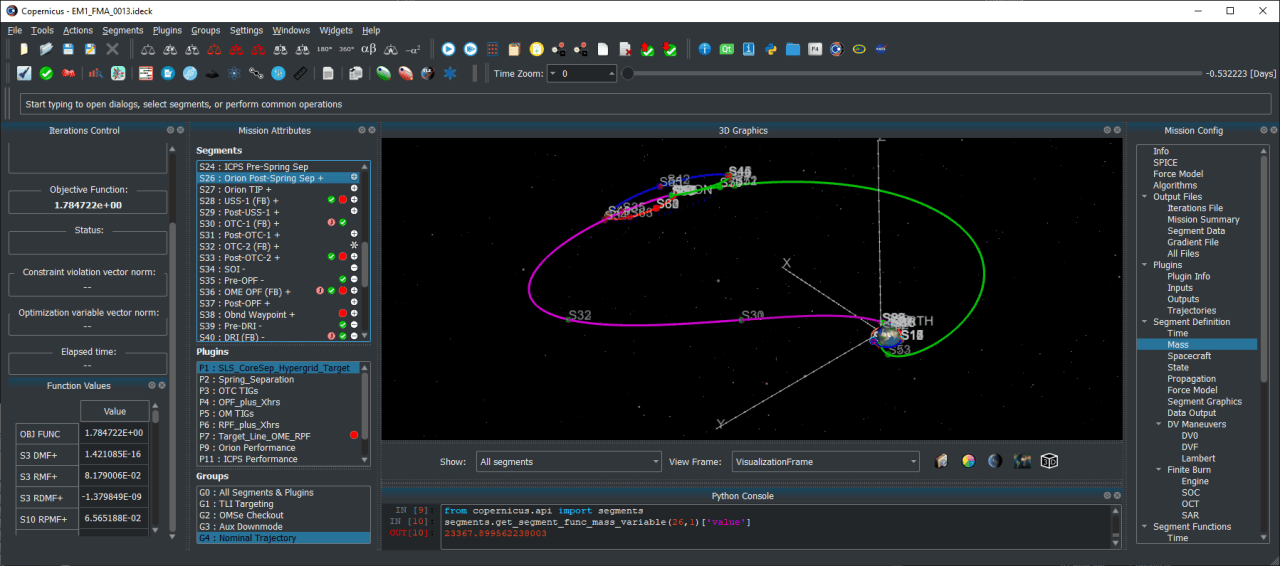
Copernicus, a generalized spacecraft trajectory design and optimization system, is capable of solving a wide range of trajectory problems such as planet or moon centered trajectories, libration point trajectories, planet-moon transfers and tours, and all types of interplanetary and asteroid/comet missions.
The Copernicus Project started at the University of Texas at Austin in August 2001. In June 2002, a grant from the NASA Johnson Space Center (JSC) was used to develop the first prototype which was completed in August 2004. In the interim, support was also received from NASA’s In Space Propulsion Program and from the Flight Dynamics Vehicle Branch of Goddard Spaceflight Center. The first operational version was completed in March 2006 (v1.0). The initial development team consisted of Dr. Cesar Ocampo and graduate students at the University of Texas at Austin Department of Aerospace Engineering and Engineering Mechanics. Since March 2007, primary development of Copernicus has been at the Flight Mechanics and Trajectory Design Branch of JSC.
The National Aeronautics and Space Act of 1958 and a series of subsequent legislation recognized transfer of federally owned or originated technology to be a national priority and the mission of each Federal agency. The legislation specifically mandates that each Federal agency have a formal technology transfer program, and take an active role in transferring technology to the private sector and state and local governments for the purposes of commercial and other application of the technology for the national benefit. In accordance with NASA’s obligations under mandating legislation, JSC makes Copernicus available free of charge to other NASA centers, government contractors, and universities, under the terms of a US government purpose license. Organizations interested in obtaining Copernicus should click here to request it.
The current version of Copernicus is 5.4.1 (released May 26, 2026).
From NASA News.