NASA News · August 26, 2026
APOD: 2026 August 26 – JWST Images The Lion’s Head Nebula
Where it is in your sky
- Object
- NGC 2392 · Eskimo Nebula · Planetary nebula
- Constellation
- Gemini
- Best seen
- Evenings from November to March; highest at midnight in January
- Climbs above 20°
- From 49° S to the North Pole
- Never rises
- South of 69° S
- What you need
- A small telescope (80–150 mm)
Tonight from your location
From the source
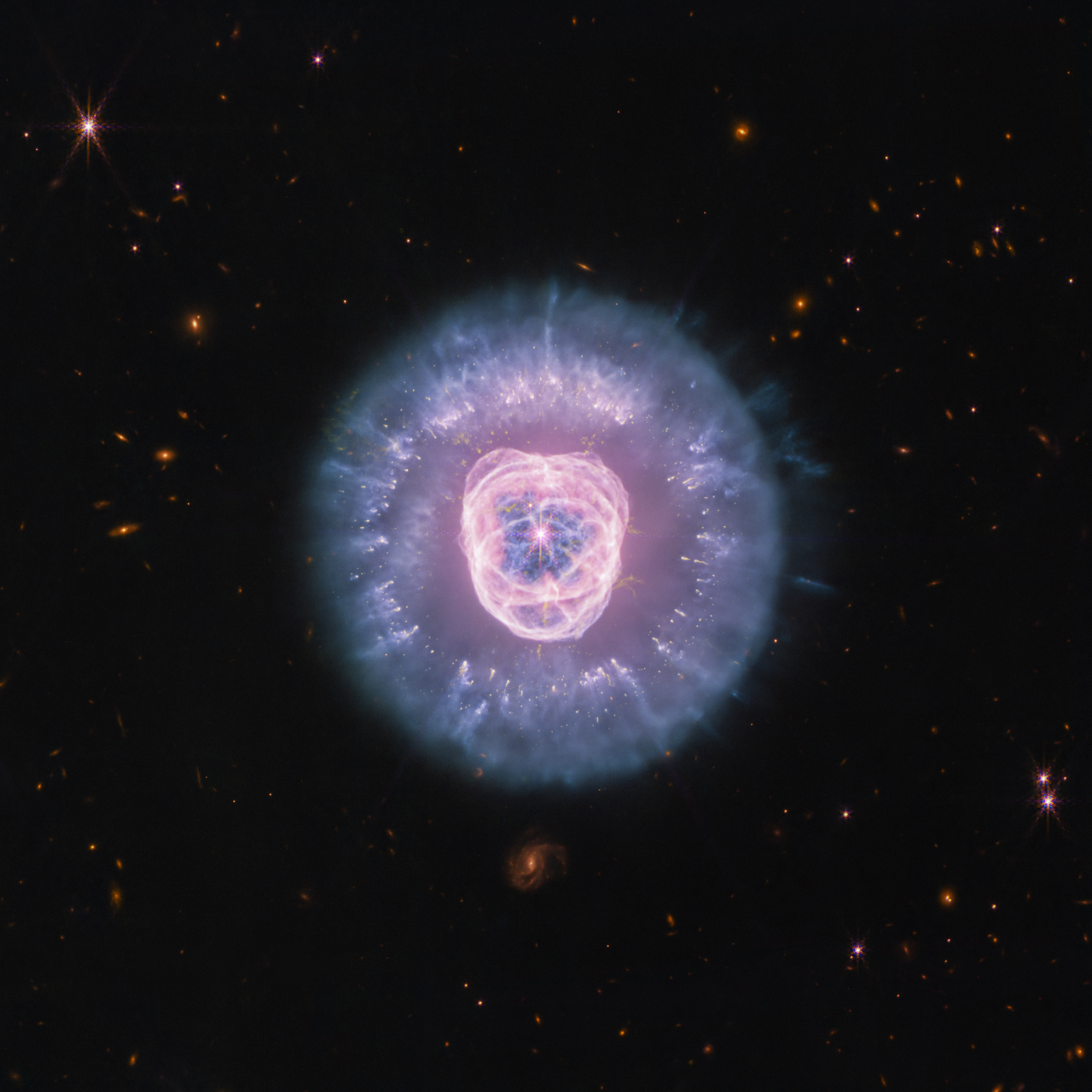
Are we looking at the future of our Sun? The James Webb Space Telescope captured today’s composite image of the Lion’s Head Nebula (NGC 2392) with its NIRCam and MIRI instruments. The Lion’s Head Nebula is the remnant of a Sun-like star. This star was unable to sustain the nuclear fusion in its core needed to remain stable. It began to shed layers of gas and dust into space, forming this planetary nebula. A hot stellar core, called a white dwarf, is left behind within the lion’s nose. Do not boop this nose! Intense radiation from the white dwarf is ionizing the gas as it expands, creating the irregular bubble that makes up the lion’s face. Dust clumps that have survived the white dwarf’s radiation and a cloud of ionized gas make up the lion’s mane. This new and more detailed view of the nebula will help humanity learn more about how the gas and dust interact with each other and the white dwarf radiation.
Tomorrow’s picture: a waterfall of light
From NASA News.


