NASA News · November 17, 2026
NASA to Cover 35th SpaceX Resupply Mission Space Station Departure
From the source
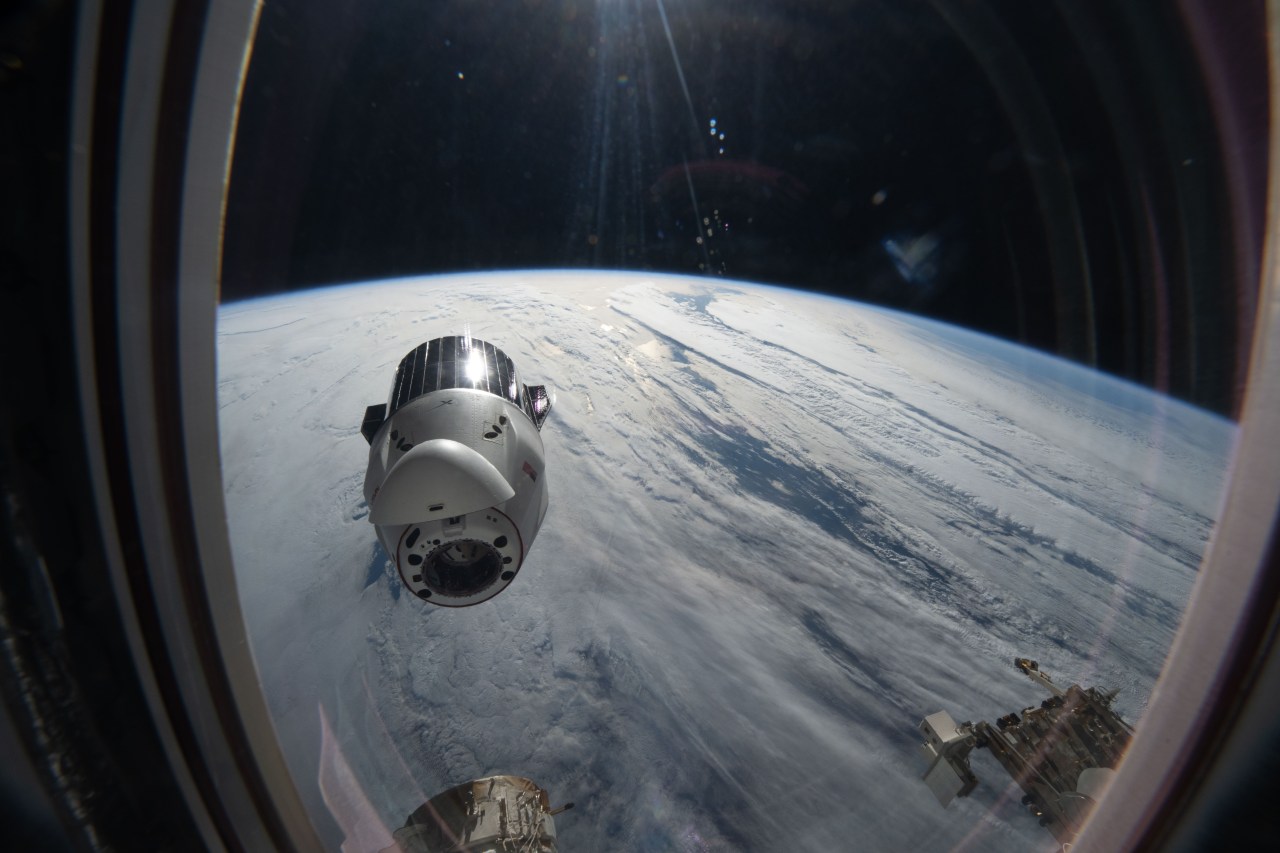
NASA and its international partners are set to receive scientific research samples and hardware as a SpaceX Dragon spacecraft departs the International Space Station no earlier than Wednesday, Nov. 18, for its return to Earth.
Pending weather conditions, the Dragon spacecraft will undock from the Harmony module’s space-facing port at 11:05 a.m. EST, following a command sent by ground controllers at SpaceX’s facility in Hawthorne, California.
NASA’s live coverage of undocking and departure begins at 10:45 a.m., streaming through a variety of platforms. Learn where to watch online:
NASA and SpaceX are monitoring weather forecasts and targeting splashdown off the California coast no earlier than 1:50 a.m. Thursday, Nov. 19 (10:50 p.m. PST Nov. 18). Teams will adjust plans as needed based on splashdown conditions in the Dragon recovery area and will provide updates on splashdown timing when available. NASA will not stream the splashdown but will post updates on its space station blog.
Thousands of pounds of cargo are returning from the space station, including research samples that could advance future space exploration and improve life on Earth. The returning research includes a 3D-bioprinted blood vessel construct scientists used to study vascular aging and cardiovascular disease in space and on Earth. Frozen tumor organoids treated aboard the station also will return, helping researchers identify new ways to improve cancer treatments and advance personalized medicine. Scientists will analyze frozen microbial samples to better understand how antibiotic-resistant bacteria survive, adapt, and evolve in space. In addition, a lighting system will return after more than three years aboard the space station, where researchers tested its potential to support astronauts’ sleep and well-being during long-duration missions.
Filled with more than 6,300 pounds of crew supplies, science investigations, and equipment, the spacecraft arrived at the space station on Oct. 15. It launched two days earlier on a Falcon 9 rocket from Space Launch Complex 40 at Cape Canaveral Space Force Station in Florida for the agency’s SpaceX 35th commercial resupply services mission.
For more than 26 years, people have lived and worked continuously aboard the International Space Station, advancing scientific knowledge and making research breakthroughs not possible on Earth. The space station helps NASA understand and overcome the challenges of human spaceflight, expand commercial opportunities in low Earth orbit, and build on the foundation for long-duration missions to the Moon, as part of the Artemis and Moon Base programs, and to Mars.
Get breaking news, images, and features from the space station on Instagram, Facebook, and X. Learn more about International Space Station research and operations at:
https://www.nasa.gov/mission/nasas-spacex-crs-35/
Josh Finch / Jimi Russell Headquarters, Washington 202-358-1100 joshua.a.finch@nasa.gov / james.j.russell@nasa.gov
Sandra Jones / Joseph Zakrzewski Johnson Space Center, Houston 281-483-5111 sandra.p.jones@nasa.gov / joseph.a.zakrzewski@nasa.gov
From NASA News.