ESA/Hubble Picture of the Month · September 22, 2025
Spiral, elliptical or neither?
Where it is in your sky
- Object
- NGC 2775 · Galaxy
- Constellation
- Cancer
- Distance
- 67 million light years
- Field of view
- 2.7′ (the full Moon is 31′)
- Best seen
- Evenings from December to April; highest at midnight in February
- Climbs above 20°
- From 63° S to 77° N
- Never rises
- South of 83° S
- What you need
- A small telescope (80–150 mm)
Tonight from your location
From the source
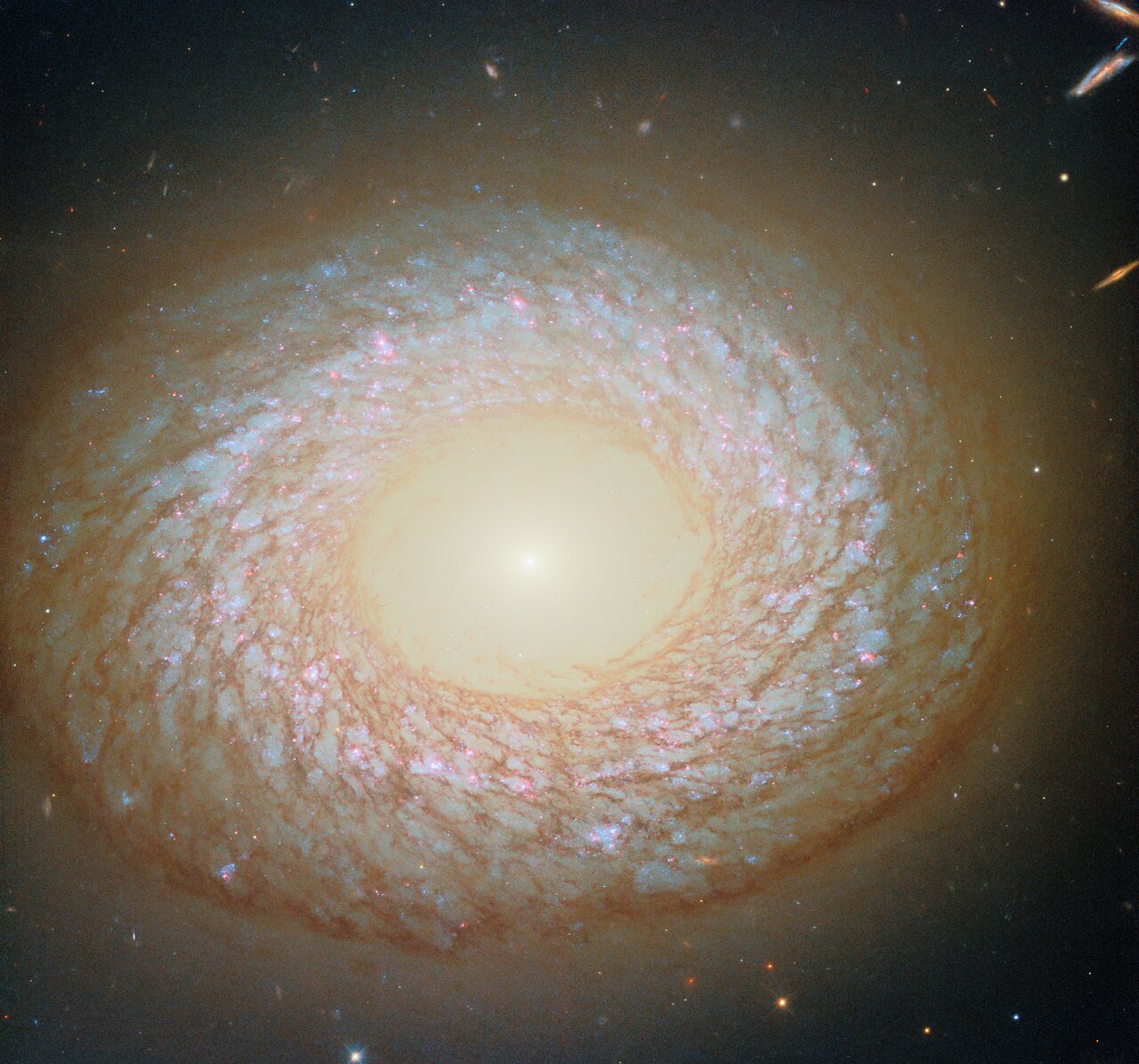
Today’s NASA/ESA Hubble Space Telescope Picture of the Week features a galaxy that’s hard to categorise. The galaxy in question is NGC 2775, which lies 67 million light-years away in the constellation Cancer (The Crab). NGC 2775 sports a smooth, featureless centre that is devoid of gas, resembling an elliptical galaxy. It also has a dusty ring with patchy star clusters, like a spiral galaxy. Which is it, then: spiral or elliptical — or neither?
Because we can only view NGC 2775 from one angle, it’s difficult to say for sure. Some researchers have classified NGC 2775 as a spiral galaxy because of its feathery ring of stars and dust, while others have classified it as a lenticular galaxy. Lenticular galaxies have features common to both spiral and elliptical galaxies.
It’s not yet known exactly how lenticular galaxies come to be, and they might form in a variety of ways. Lenticular galaxies might be spiral galaxies that have merged with other galaxies, or that have mostly run out of star-forming gas and lost their prominent spiral arms. They also might have started out more similar to elliptical galaxies, then collected gas into a disk around them.
Some evidence suggests that NGC 2775 has merged with other galaxies in the past. Invisible in this Hubble image, NGC 2775 has a tail of hydrogen gas that stretches almost 100 000 light-years around the galaxy. This faint tail could be the remnant of one or more galaxies that wandered too close to NGC 2775 before being stretched apart and absorbed. If NGC 2775 merged with other galaxies in the past, it could explain the galaxy’s strange appearance today.
A Hubble image of NGC 2775 was previously released in 2020. The new version adds observations of a specific wavelength of red light that is emitted by clouds of hydrogen gas surrounding massive young stars.
From ESA/Hubble Picture of the Month. ESA/Hubble & NASA, F. Belfiore, J. Lee and the PHANGS-HST Team, CC BY 4.0; links removed.


