ESA/Hubble Picture of the Month · November 17, 2025
Finding star clusters in the Lost Galaxy
Where it is in your sky
- Object
- NGC 4535 · Galaxy
- Constellation
- Virgo
- Distance
- 50 million light years
- Field of view
- 2.7′ (the full Moon is 31′)
- Best seen
- Evenings from January to June; highest at midnight in March
- Climbs above 20°
- From 62° S to 78° N
- Never rises
- South of 82° S
- What you need
- A small telescope (80–150 mm)
Tonight from your location
From the source
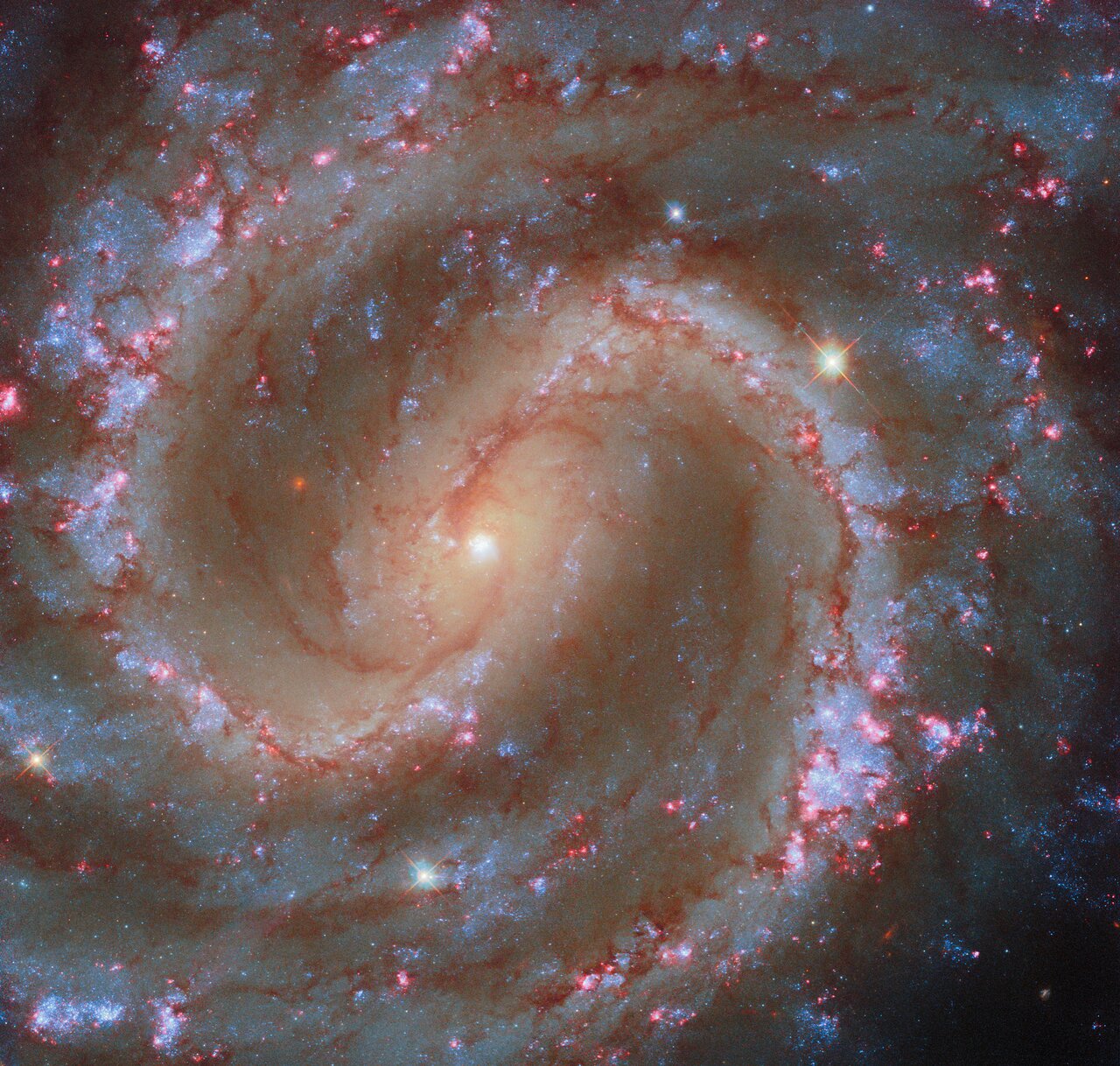
Today’s ESA/Hubble Picture of the Week features the spiral galaxy NGC 4535, which is situated about 50 million light-years away in the constellation Virgo (The Maiden). This galaxy has been nicknamed the ‘Lost Galaxy’ because it’s extremely faint when viewed through a small telescope. With a mirror spanning 2.4 metres across, Hubble is well equipped to observe dim galaxies like NGC 4535 and pick out features like its massive spiral arms and central bar of stars.
On full display in this Hubble image are NGC 4535’s young star clusters, which dot the galaxy’s spiral arms. Many of the groupings of bright blue stars are enclosed by glowing pink clouds. These clouds, called H II (‘H-two’) regions, are a sign that the galaxy is home to especially young, hot, and massive stars that are blazing with high-energy radiation. By heating the clouds in which they were born, shooting out powerful stellar winds, and eventually exploding as supernovae, massive stars certainly shake up their surroundings.
This Hubble image incorporates data from an observing programme that will catalogue roughly 50 000 H II regions in nearby star-forming galaxies like NGC 4535. A previous image of NGC 4535 was released in 2021. Both the 2021 image and today’s image incorporate observations from the PHANGS programme, which seeks to understand the connections between young stars and cold gas. Today’s image adds a new dimension to our understanding of NGC 4535 by capturing the brilliant red glow of the nebulae that encircle massive stars in their first few million years of life.
From ESA/Hubble Picture of the Month. ESA/Hubble & NASA, F. Belfiore, J. Lee and the PHANGS-HST Team, CC BY 4.0; links removed.


